Kirjallisuutta
Best Books to Read If Your Spouse Comes Out as Gay
Discovering that your spouse is gay, lesbian, bisexual, or transgender can be one of the most confusing and emotional experiences in a relationship. Many people feel shock, grief, anger, or deep uncertainty about the future.
If your partner has recently come out, you may feel alone. However, thousands of people experience similar situations in what are often called mixed-orientation marriages — relationships where partners have different sexual orientations.
Books can provide guidance, emotional support, and real-life stories from people who have faced the same situation. Here are ten of the most helpful books on the topic.
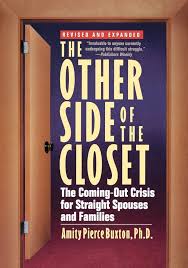
1. The Other Side of the Closet – Amity Pierce Buxton
One of the most well-known books about mixed-orientation marriages. The author interviewed hundreds of couples and explores how relationships change when one spouse comes out as gay or bisexual.
This book discusses:
-
emotional reactions
-
family impact
-
whether couples stay together or separate
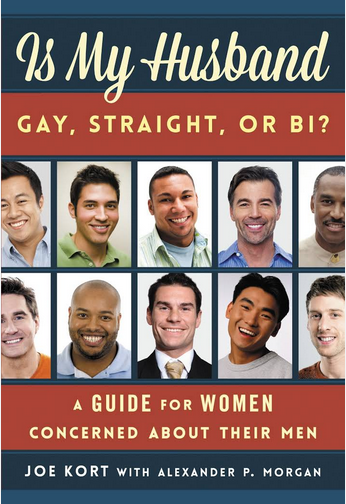
2. Is My Husband Gay, Straight, or Bi? – Joe Kort
Written by a sex therapist, this book helps women understand sexual orientation, secrecy, and the complex emotions that can arise when a husband may not be heterosexual.
Jennifer can’t believe it. Just married and pregnant, she discovers that her husband has been meeting Brad for sex. When confronted, Tom doesn’t deny it, but he insists it’s just “a thing” and he isn’t gay. Elsewhere, John’s wife, Karen, discovers that her husband likes to watch gay porn. John doesn’t understand his wife’s reaction. Why does she care what he watches if he’s not unfaithful? In couple’s therapy, Karen and Jennifer raise the same questions: Does this mean my husband is gay? Can my marriage survive?
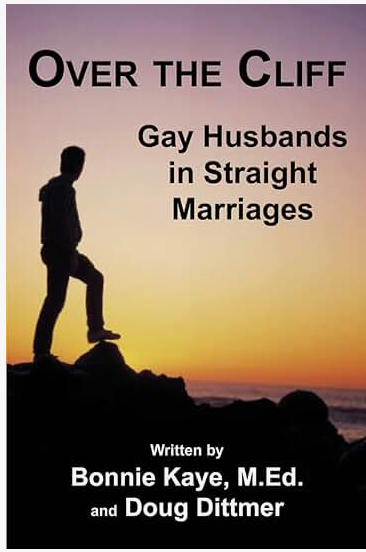
Over the Cliff is a self-help book for husbands and wives living in straight/gay marriages, also known as mixed orientation marriages. Over three million gay men in the United States and mil-lions more around the world are living double lives in marriages to women due to societal pressures or a lack of understanding their homosexuality at the time of marriage. This book has over a dozen interviews with men who have lived through this experience and offer their insights to others.
The book is co-authored by Bonnie Kaye, M.Ed., an internationally recognized counseling specialist for straight wives married to gay men and Doug Dittmer, a gay husband peer counselor who has worked with Kaye over the past five years helping numerous gay men in marriages come to terms with their homosexuality so they can move on to more fulfilling lives.
Straight Wives: Shattered Lives is a compilation of 27 stories of members of Bonnie Kaye, M.Ed's international support group. The women tell their personal stories to help millions of other women livnig or leaving their straight/gay marriages with the advice on how to move on. Kaye is a recogized authority in the counseling field of straight/gay marriages. Since 1984, she has worked with over 35,000 women in America and other countries helping them to put their lives back together by shedding light when they are surrounded by darkness on this subject. This is her fourth self-help book written on this subject. Women who don't understand how these "mis-marriages" (mistaken marriages) happen will learn from others about the dynamics of these relationships.
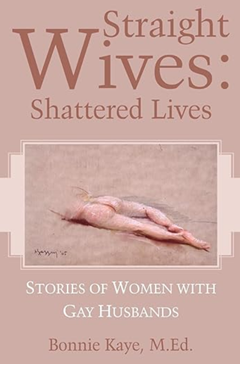
5. When Your Spouse Comes Out – Lydia Parks
A compassionate guide designed to help people navigate the emotional shock that often follows a partner’s coming out.
Effective therapeutic self-help techniques for a straight mate’s recovery
One of the most traumatic events that can happen in a marriage is discovering your mate is gay. When Your Spouse Comes Out: A Straight Mate’s Recovery Manual is a comprehensive exploration of the trauma that provides practical steps that successful individuals have taken to keep this event from ruining their future. This guide offers solid therapeutic techniques for self-help and presents poignant true stories that illustrate that the damage is not irreparable. The book examines the various reactions to the coming-out event, the personal challenges and obstacles often experienced, and shares lessons learned and some of the secrets of transformation.
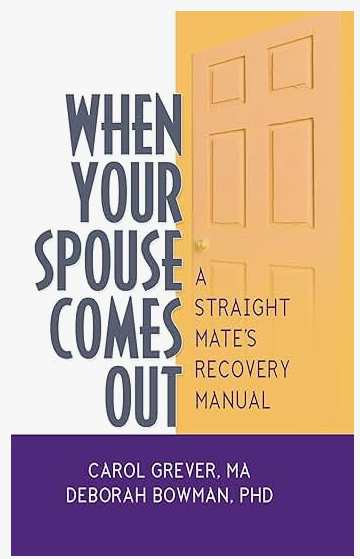
A guide focused on the experiences of straight spouses and how they rebuild identity and confidence after the revelation.
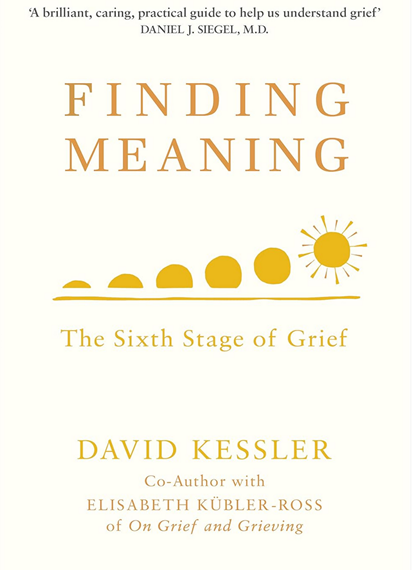
7. Finding Meaning - The Sixth Stage of Grief
''A brilliant, caring, practical guide to help us understand grief'' Daniel J Siegel, M.D.
''Finding Meaning is Kessler’s poignant response to society’s insensitivity, [a] how-to in the very best sense'' LA Times
David Kessler – the world''s foremost expert on grief and the coauthor with Elisabeth Kübler-Ross of the iconic On Grief and Grieving – journeys beyond the classic five stages to discover a sixth stage: meaning.
David has spent decades teaching about end of life, trauma and grief. And yet his life was upended by the sudden death of his twenty-one-year-old son. How does the grief expert handle such a devastating loss?
In Finding Meaning, Kessler shares his hard-earned wisdom and offers a roadmap to remembering those who have died with more love than pain, how to move forward in a way that honours our loved ones and ultimately transform grief into a more peaceful and hopeful experience.
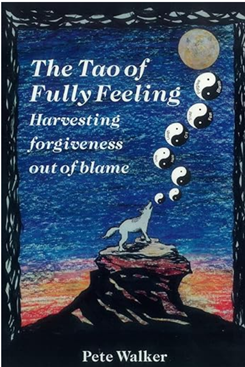
8. The Tao of Fully Feeling - Harvesting forgiveness out of blame
The price of emotional renunciation is a constant, wasteful expenditure of energy that leaves us depressed and taciturn, imprisoned in the apathy and ennui of the "seen that, been there, done that" syndrome. When we surrender and soften to our feelings, we reconnect with our inborn vitality and with the invaluable instinct and intuition that our feelings naturally carry.
The Tao of Fully Feeling describes the middle ground of emotional aliveness that lies between emotional deadness and emotional explosiveness. It helps us to soften and relax into our feelings without exiling them or enshrining them. It guides us to be emotionally expressive in benign, intimacy-enhancing ways.
The Tao of Fully Feeling teaches us to respond to our painful and potentially disruptive feelings in healthy ways. It illustrates the enriching aspects of the so-called negative emotions and helps us achieve the emotional flexibility whereby sadness easily mellows into solace, anger unfolds into laughter, fear evolves into excitement, jealousy opens up into appreciation, and blame gives way to forgiveness.
The Tao of Fully Feeling refutes the black-and-white notion that blame is never justifiable. It describes safe, nondestructive ways of feeling and expressing blame - ways that ironically enhance our capacity to feel genuine forgiveness.
When we authentically forgive our parents, we know what we are forgiving them for and what specifically was blameworthy about their behavior in the first place. When we forgive before we blame, we risk dragging the full weight of our childhood hurt and anger around forever, like an exhausted backpacker who is too dulled and over-trusting to notice that someone has put a boulder in his/her pack.
9. Complex PTSD - From Surviving to Thriving
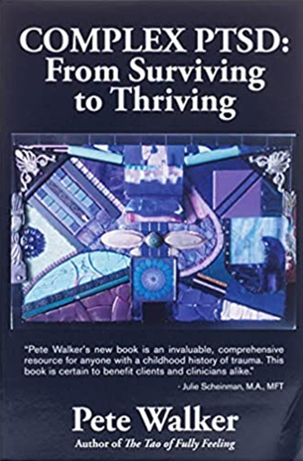
I have Complex PTSD (CPTSD) and wrote this book from the perspective of someone who has experienced a great reduction of symptoms over the years. I also wrote it from the viewpoint of someone who has discovered many silver linings in the long, windy, bumpy road of recovering from CPTSD. I felt encouraged to write this book because of thousands of e-mail responses to the articles on my website that repeatedly expressed gratitude for the helpfulness of my work. An often echoed comment sounded like this: At last someone gets it. I can see now that I am not bad, defective or crazy…or alone!
The causes of CPTSD range from severe neglect to monstrous abuse. Many survivors grow up in houses that are not homes – in families that are as loveless as orphanages and sometimes as dangerous. If you felt unwanted, unliked, rejected, hated and/or despised for a lengthy portion of your childhood, trauma may be deeply engrained in your mind, soul and body.
This book is a practical, user-friendly self-help guide to recovering from the lingering effects of childhood trauma, and to achieving a rich and fulfilling life. It is copiously illustrated with examples of my own and my clients’ journeys of recovering. This book is also for those who do not have CPTSD but want to understand and help a loved one who does. This book also contains an overview of the tasks of recovering and a great many practical tools and techniques for recovering from childhood trauma. It extensively elaborates on all the recovery concepts explained on my website, and many more.
10. In an Unspoken Voice - How the Body Releases Trauma and Restores Goodness
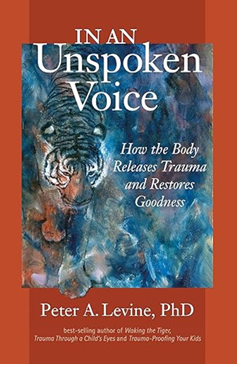
Discover the body’s innate power to heal from trauma—the classic, life-changing guide to trauma recovery from the creator of Somatic Experiencing® (SE)
Unraveling trauma in body, brain, and spirit—a revolution in treatment and beloved global bestseller
In In an Unspoken Voice, renowned trauma expert Peter A. Levine, PhD, reveals how the body holds the key to recovering from complex trauma and experiences that overwhelm our nervous systems, from adverse childhood experiences to PTSD . Drawing on decades of clinical practice, personal stories, case studies, and trauma science, Dr. Levine shows that trauma can be healed—if we can learn to listen to our bodies’ innate, unspoken wisdom.
Through vivid accounts—from his own near-fatal accident to the journeys of clients grappling with their own traumas and scars—you’ll learn how our nervous systems respond to threat; why trauma can leave us “stuck” in fear and numbness; and, most importantly, how to restore resilience and heal toward empowered, mind-body wholeness. This book explains:
- How shaking, trembling, and instinctive movements are essential embodied responses—and can help us release trauma safely and effectively
- The biological “map” of flight, flight, freeze, and collapse—and how to break free from paralyzing experiences of fear and trauma
- Practical steps and evidence-based exercises to help you gently discharge survival energy
- How to reawaken your natural capacity for self-regulation
- The SIBAM—Sensation, Image, Behavior, Affect, and Meaning—model for integrating fragmented experiences
- Real-life wisdom and insights from case studies of survivors
11. It Didn´t Start With You - How inherited family trauma shapes who we are and how to end the cycle
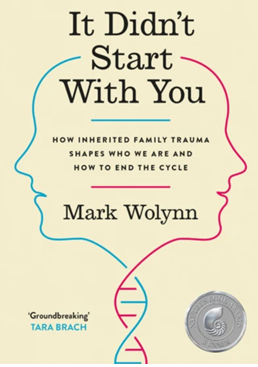
Depression. Anxiety. Chronic Pain. Phobias. Obsessive thoughts. The evidence is compelling: the roots of these difficulties may not reside in our immediate life experience or in chemical imbalances in our brains—but in the lives of our parents, grandparents, and even great-grandparents. The latest scientific research, now making headlines, supports what many have long intuited—that traumatic experience can be passed down through generations. It Didn’t Start with You builds on the work of leading experts in post-traumatic stress, including Mount Sinai School of Medicine neuroscientist Rachel Yehuda and psychiatrist Bessel van der Kolk, author of The Body Keeps the Score. Even if the person who suffered the original trauma has died, or the story has been forgotten or silenced, memory and feelings can live on. These emotional legacies are often hidden, encoded in everything from gene expression to everyday language, and they play a far greater role in our emotional and physical health than has ever before been understood.
As a pioneer in the field of inherited family trauma, Mark Wolynn has worked with individuals and groups on a therapeutic level for over twenty years. It Didn’t Start with You offers a pragmatic and prescriptive guide to his method, the Core Language Approach. Diagnostic self-inventories provide a way to uncover the fears and anxieties conveyed through everyday words, behaviors, and physical symptoms. Techniques for developing a genogram or extended family tree create a map of experiences going back through the generations. And visualization, active imagination, and direct dialogue create pathways to reconnection, integration, and reclaiming life and health. It Didn’t Start With You is a transformative approach to resolving longstanding difficulties that in many cases, traditional therapy, drugs, or other interventions have not had the capacity to touch.
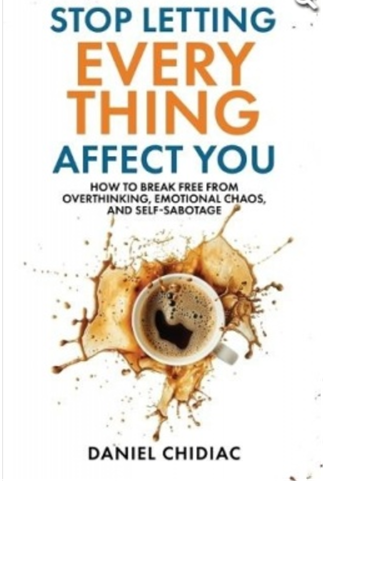
12. Stop letting everything affect you
STOP LETTING EVERYTHING AFFECT YOU is a transformative guide for anyone who overthinks every interaction, gets stuck in emotional chaos, and finds themselves trapped in cycles of self-sabotage. With raw honesty and practical wisdom, Daniel Chidiac reveals why small things ruin your entire day and offers proven strategies to finally break free.
This book will teach you how to:
Stop letting little things ruin your entire day.
Stop self-sabotaging.
Set healthy boundaries without feeling guilty.
Recognize the difference between real guilt and manipulation.
Break the cycle of overthinking before it spirals out of control.
Stop taking everything so personally and free yourself from emotional reactivity.
Identify toxic patterns in relationships and walk away without regret.
Be more in control and feel better everyday.
Shift your mindset from victimhood to self-empowerment.
Learn the art of emotional detachment-how to be unbothered without becoming cold.
Move forward unapologetically, without feeling the need to explain your growth.
.